
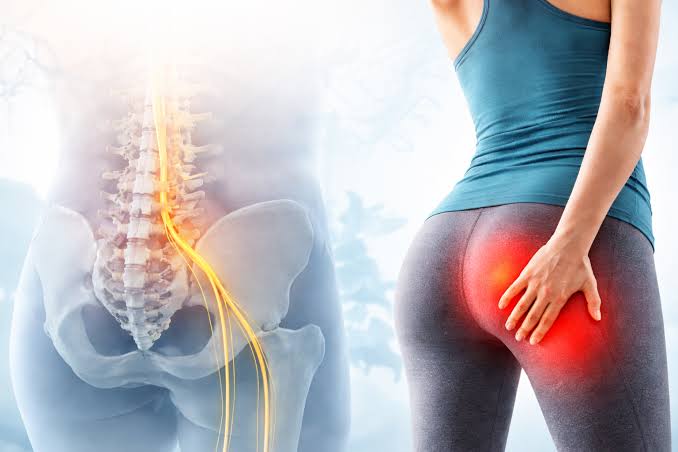
Sciatica is a term many people have heard, but it is often misunderstood.
Some people use it to describe any pain in the lower back. Others assume it always means a slipped disc. In reality, sciatica refers to a pattern of symptoms involving irritation or compression affecting the sciatic nerve.
The sciatic nerve is the largest nerve in the body. It travels from the lower back through the buttock and down the leg.
When it becomes irritated, symptoms can range from mild discomfort to significant pain, tingling, numbness or weakness.
Understanding what sciatica is — and what it is not — can make it easier to know when symptoms should be assessed and what kinds of factors may be contributing.
What does sciatica feel like?
Sciatica does not feel exactly the same for everyone.
Common symptoms can include:
- pain starting in the lower back or buttock
- pain travelling down the back or side of the leg
- tingling or pins and needles
- numbness
- burning or electric-like sensations
- weakness in the leg or foot
For some people, the leg pain is more noticeable than the lower back pain.
Others may experience symptoms only in the buttock, thigh or calf.
The location and intensity of symptoms depend on which structures are involved and how irritated the nerve is.
What causes sciatica?
There are several possible causes of sciatic nerve irritation.
One common cause is a change involving one of the discs in the lower spine.
Spinal discs sit between the vertebrae and help absorb load. If a disc bulges or changes shape, it can sometimes irritate a nearby nerve.
However, discs are not the only possible cause.
Other contributing factors may include:
- narrowing around the spinal nerves
- changes in joints of the lower spine
- inflammation
- muscle tension or spasm
- previous injury
- reduced movement or physical capacity
- sudden increases in physical activity
The presence of sciatic-type pain does not automatically tell you the exact cause.
That is why an assessment is often more useful than trying to diagnose the problem from symptoms alone.
Is sciatica always caused by a slipped disc?
No.
A disc problem can contribute to sciatica, but it is not the only explanation.
It is also worth noting that disc changes are relatively common and do not always cause pain.
Many people have disc bulges or other spinal changes without experiencing symptoms.
This is one reason scans such as MRI need to be interpreted in the context of a person’s symptoms and physical assessment rather than treated as the whole diagnosis.
Why can sitting make sciatica worse?
Some people notice that sitting for long periods increases their symptoms.
This may happen because certain sitting positions place more pressure through the lower spine or because the body remains in one position for an extended period.
Long car trips, desk work and flights can therefore sometimes aggravate sciatic-type symptoms.
It does not necessarily mean sitting is dangerous.
Often, changing position regularly and avoiding prolonged periods in one posture can be helpful.
For desk workers, simple changes may include standing up periodically, taking short walks and changing sitting positions throughout the day.
Can exercise help?
Movement is often an important part of recovery, but the type and amount of exercise should match the individual.
Some people become afraid to move when nerve pain develops.
That is understandable, particularly when symptoms are sharp or unpredictable.
However, completely avoiding movement for long periods can sometimes contribute to reduced strength and confidence.
The goal is usually to find movements that are tolerable and gradually restore activity.
Depending on the person, this may involve walking, mobility work, strengthening exercises or a gradual return to normal training.
There is no single exercise that works for every person with sciatica.
How long does sciatica last?
The duration varies considerably.
Some episodes improve relatively quickly, while others can persist for weeks or longer.
Factors that may influence recovery include the underlying cause, severity of nerve irritation, activity levels, general health and how symptoms are managed.
Persistent pain does not automatically mean permanent damage.
Nerves can be sensitive, and symptoms may take time to settle even as the underlying irritation improves.
When should sciatica be assessed?
Sciatic-type symptoms are worth assessing when they:
- continue for more than a short period
- are getting worse
- keep returning
- interfere with sleep
- affect walking or normal activities
- cause ongoing numbness or tingling
- are associated with noticeable weakness
An assessment can help identify whether symptoms are likely to be nerve-related and whether further investigation is needed.
When is sciatica an emergency?
Most episodes of sciatica are not medical emergencies.
However, certain symptoms require urgent medical attention.
These include:
- loss of bladder or bowel control
- numbness around the groin or saddle area
- rapidly worsening weakness
- severe symptoms affecting both legs
- fever with significant back pain
- unexplained weight loss
- severe pain after major trauma
These symptoms can indicate a more serious condition and should be assessed promptly.
How is sciatica treated?
Treatment depends on the cause and severity of symptoms.
For many people, management may include a combination of:
- staying reasonably active
- modifying aggravating activities
- gradual strengthening
- mobility work
- pain-relieving strategies
- manual therapy
- education about movement and recovery
In some cases, medication, imaging or specialist medical care may be appropriate.
The best approach is usually one that is tailored to the individual rather than based on a one-size-fits-all treatment.
Why does sciatica sometimes keep coming back?
Recurring sciatica can happen for many of the same reasons recurring lower back pain develops.
The initial symptoms may settle before the underlying contributing factors have changed.
These may include:
- work or sitting habits
- exercise load
- reduced strength
- limited physical capacity
- previous injury
- movement patterns
- recovery and sleep
The goal should not necessarily be to avoid movement.
Instead, it is often more useful to improve the body’s ability to tolerate normal activity.
The bigger picture
Sciatica can be uncomfortable and sometimes alarming, particularly when symptoms travel down the leg or include tingling and numbness.
But the term describes a symptom pattern rather than one specific diagnosis.
The important question is not simply whether someone has “sciatica”.
It is what is causing the symptoms and what needs to change to help the person recover.
That may involve adjusting activity, improving strength, changing training load or addressing other contributing factors.
For people with persistent or recurring symptoms, a proper assessment can provide much more useful information than guessing from symptoms alone.
About Sydney Chiropractic
Sydney Chiropractic is based in Marrickville, Sydney, and works with people experiencing lower back pain, sciatica, neck pain and movement-related problems.
The clinic’s approach focuses on understanding how symptoms relate to movement, lifestyle, work and activity, with the aim of helping people return to the things they want to do.
For more information, visit sydchiropractic.com.au.
This article is for general educational purposes only and does not replace individual medical advice, diagnosis or treatment.