Pregnancy and the months after birth can be filled with hope, change, and deep love, but they can also bring anxiety, low mood, irritability, fear, or a sense of being overwhelmed. Needing maternal mental health support during pregnancy and after birth is not a sign of weakness. It is a normal health need during one of the most demanding transitions a body and mind can go through.
At Rao Hospital, we have seen across generations of families that emotional wellbeing is closely tied to physical recovery, bonding, and long-term family health. If you’re seeking reliable, specialist-led care at a trusted women’s and children’s hospital, explore our services and patient-focused approach at Rao Hospital.
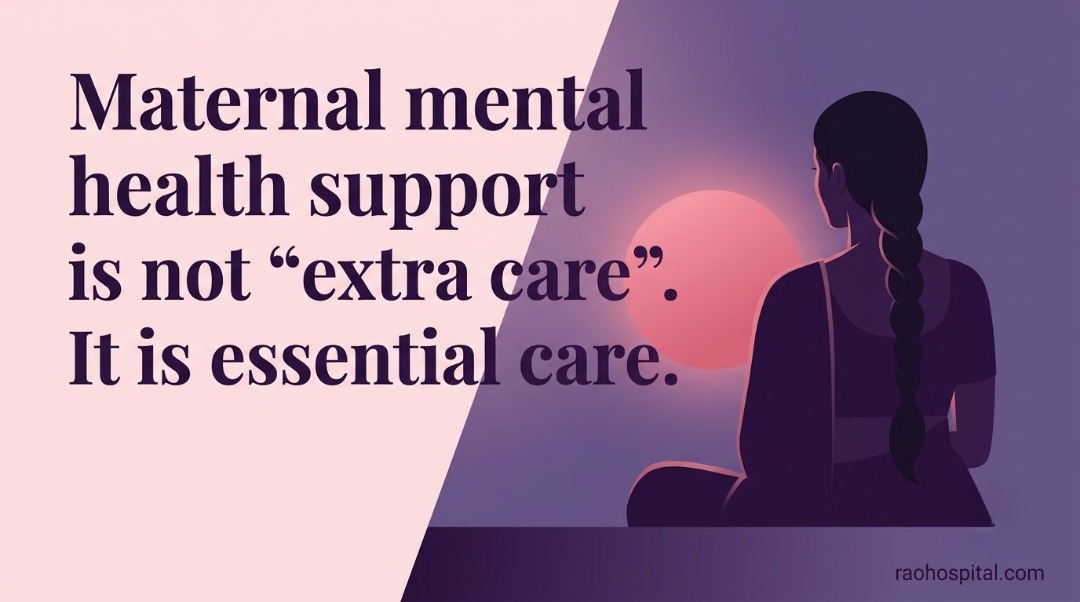
Maternal mental health support is not “extra care”. It is essential care.
Mental health conditions are considered among the most common complications of pregnancy and childbirth. Large population estimates suggest that around 1 in 5 pregnant and postpartum people experience a mental health condition each year.
Postpartum depression alone is often estimated at about 1 in 8 mothers, and many depressive episodes that show up after birth actually begin during pregnancy. This is why Perinatal Mental Health Care should start early and continue well beyond delivery.
Why pregnancy can be emotionally harder than people expect
Even in a wanted, well-supported pregnancy, the mind is adapting to constant change. For couples who have faced infertility, miscarriage, IVF, or long waiting years, pregnancy can also carry layered fears that others may not see.
Common emotional stressors during pregnancy include:
- Hormonal shifts that can intensify anxiety or low mood
- Sleep disruption and physical discomfort
- Fear of birth, health complications, or “something going wrong”
- Pressure from family expectations or social comparisons
- Past trauma, losses, or a difficult fertility journey (PCOS, endometriosis, low ovarian reserve, male-factor infertility)
This is exactly where Maternal Health Support helps, not by “making feelings go away,” but by giving you skills, perspective, and a safe place to process what is happening.
Why the postpartum period is a high-risk window
After delivery, the body is healing while responsibilities increase overnight. Sleep deprivation, feeding challenges, pain, and identity shifts can be intense, especially for first-time mothers and for women recovering from complicated births or high-risk pregnancies.
Research consistently shows that mental health risk rises again after birth, and the early postnatal months are a particularly sensitive period for more severe illness in a small but important number of women. Tragically, suicide and overdose are recognized among the leading causes of death in the first year postpartum, which is why early support and follow-up truly matter.
“Baby blues” vs postpartum depression and anxiety: a simple guide
Many mothers experience tearfulness or mood swings in the first few days after delivery. But when symptoms persist or worsen, it may be more than the blues.
| What you notice | When to take it seriously |
| Crying spells, irritability, feeling emotionally “raw” | If it lasts beyond 2 weeks or affects daily functioning |
| Constant worry, racing thoughts, panic-like symptoms | If you cannot rest even when the baby sleeps |
| Feeling numb, disconnected, or hopeless | If bonding feels impossible or you feel like you are “not yourself” |
| Intrusive thoughts that scare you | If thoughts feel repetitive, distressing, or unsafe |
If you are unsure, that is reason enough to talk to someone. Getting help early is protective.
The hidden problem: many mothers go undiagnosed and untreated
One of the biggest challenges in maternal mental health is not lack of solutions. It is the treatment gap. Estimates suggest a majority of women with postpartum depression symptoms never receive a formal diagnosis, and many maternal mental health conditions remain untreated.
Common reasons include:
- “I should be grateful, why am I feeling this way?”
- Fear of judgment from family or society
- Assuming symptoms are normal motherhood
- Lack of time, childcare, or privacy
- Not knowing where to find the right professional support
This is why accessible, non-judgmental counselling for new mothers Coimbatore families can rely on should be part of routine maternity care.
What support can look like, and what actually helps
Support is not one-size-fits-all. The right plan depends on your symptoms, your medical history, your support system, and your stage (pregnancy vs postpartum).
Helpful options often include:
- Therapy and structured counselling sessions
- Partner and family education so support at home improves
- Sleep and routine planning for recovery
- Nutrition support and realistic postpartum self-care
- Medical evaluation when symptoms are moderate to severe
If you are looking for therapy for women Coimbatore patients can access within a women-centered hospital setting, Rao Hospital offers integrated emotional wellbeing support through our psychology team.
When to seek urgent help
Please seek urgent medical care if you experience:
- Thoughts of self-harm or harming the baby
- Hallucinations, extreme confusion, or sudden severe mood changes
- Inability to sleep for days with escalating agitation
- Feeling unsafe at home
These symptoms are medical emergencies, and timely help can be life-saving.
A note for couples on fertility journeys
For many families, the path to pregnancy includes years of stress, procedures, and disappointment. Even after conception, emotional strain may persist. Choosing a team that understands both reproductive medicine and whole-person care matters, especially when you want continuity from fertility to maternity.
Rao Hospital is widely trusted as the best fertility hospital in Coimbatore for families who want ethical, experienced care grounded in decades of outcomes and follow-through.
If you are searching for the best counselling psychologist in coimbatore, or simply want a calm, confidential space to talk through what you are feeling, you deserve support that is skilled and kind.
Maternal mental health support during pregnancy and after birth protects not only the mother, but also the baby and the entire family system. If you are ready to take the next step, the team at Rao Hospital is here for you. With over 70 years of compassionate care and more than 30,000 successful fertility treatments, you are in trusted hands. Call us at +91 96299 19191 or visit www.raohospital.com to schedule your consultation today.